
A City Divided. A Community Reimagined.
This development is not just about eleven townhomes.
It is about healing a historic wound. About ensuring that, as Rochester evolves, those who endured the consequences of past planning decisions are not left behind again.
Here’s our story, and how we aim to help.

The Divide
I grew up on the north side of the Inner Loop. Before I knew zoning maps or transportation policy, I knew what it felt like to cross that overpass and feel like you were entering a different world. South of the Loop—tree-lined streets, historic homes, proximity to downtown arts institutions. North of the Loop—Marketview Heights, resilience, hustle, families holding it down despite decades of disinvestment.
That divide didn't happen by accident.
In the 1950s, "progress" came to Rochester with bulldozers. Interstate 490 and the Inner Loop were sold as modernization—faster commutes, suburban access, a future built for cars. But hundreds of homes, businesses, and churches were demolished. Families were displaced. Blocks of life were erased. Franklin Square—designed by Frederick Law Olmsted—was severed in half.
What replaced it was asphalt. A moat. A physical barrier that separated downtown from the very neighborhoods that sustained it.
Marketview Heights, a working-class community of primarily Black and Latino residents, bore the brunt. The Loop became more than infrastructure. It became a symbol. A line drawn through a city.
The Hinge
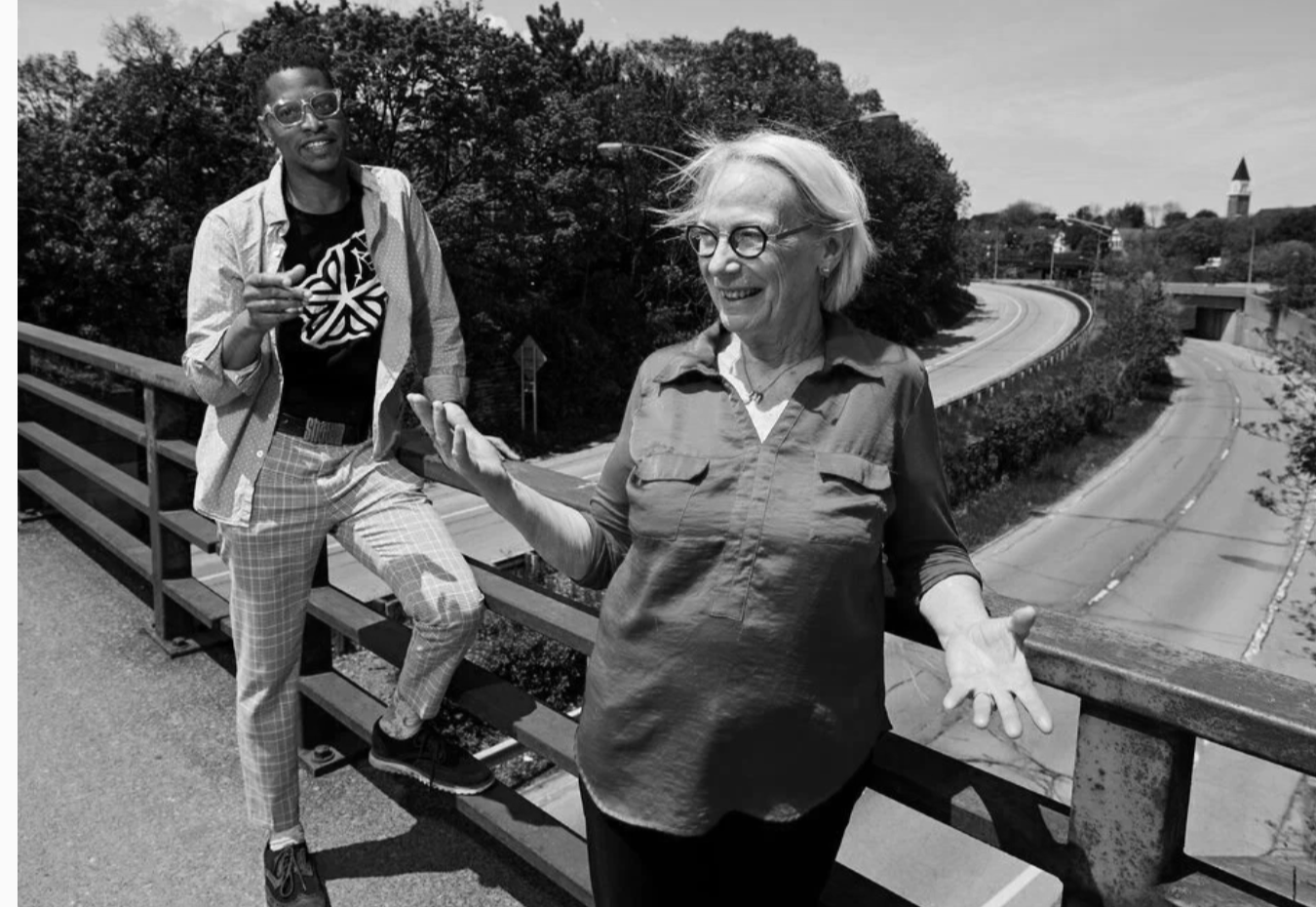
Decades later, Suzanne Mayer—who lives in Grove Place just south of the Loop—and I found ourselves working together during a political campaign. Different backgrounds. Different sides of the highway. But we both saw something clearly: redevelopment was happening without meaningful community voice.
We had watched the Inner Loop East fill in. We had seen how decisions can be made quickly when residents aren't in the room.
“If we don’t do it, who will?”
So in 2018, we co-founded Hinge Neighbors.
The name was intentional. A hinge connects two sides so they can move forward together. Our mission was simple but powerful: bring together the communities divided by the Inner Loop North before demolition and reconstruction began. Not after. Before.
For eight years, we listened.
Listening sessions. Design workshops. Neighborhood gatherings. Conversations on porches, in living rooms, in community centers. When we listen, when we try to understand, when we reach out and ask and give—we learn what really matters.
And one message surfaced again and again:Not just housing, not just development, but ownership. Affordable homeownership.
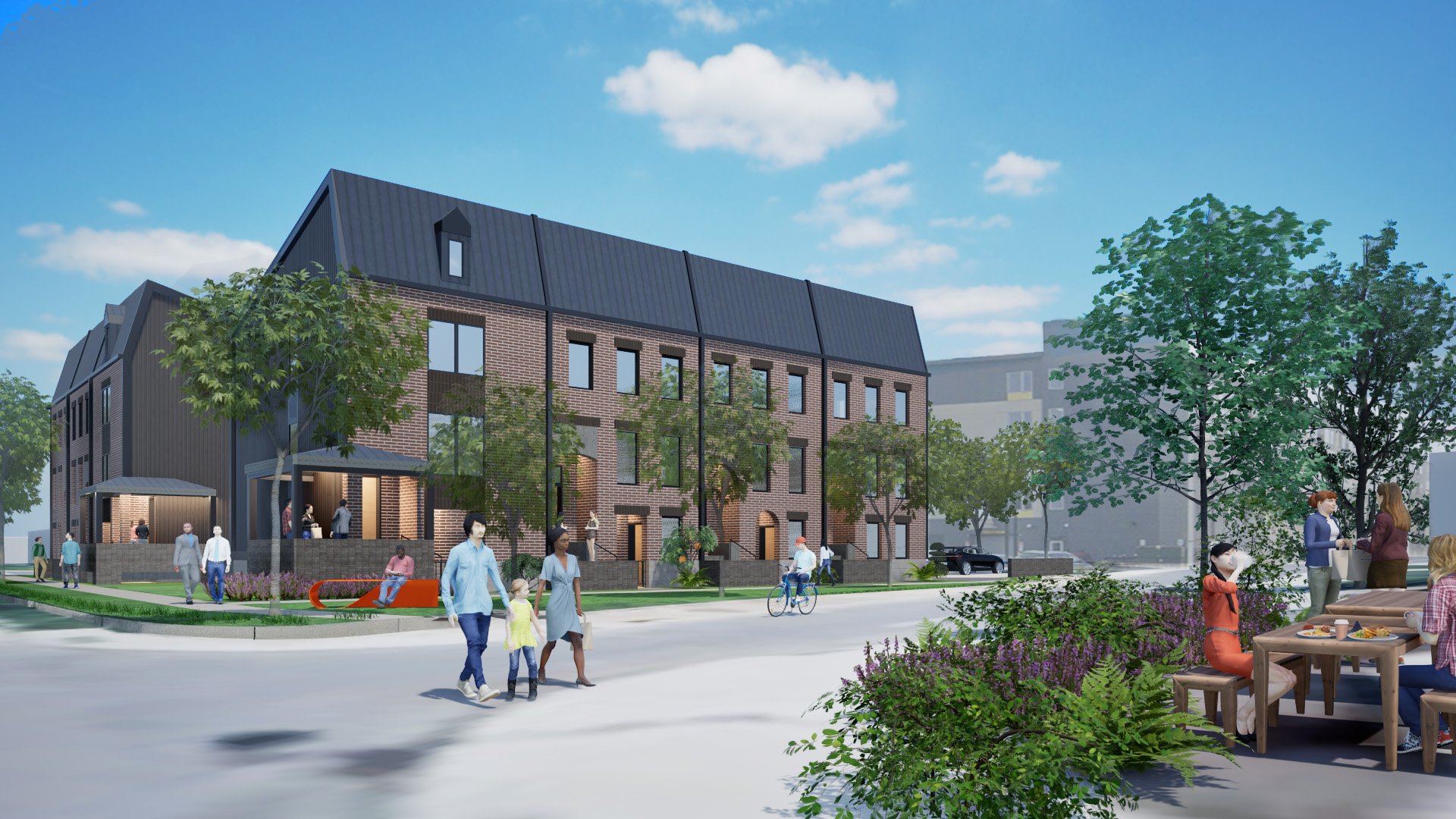
When the City of Rochester issued a call for proposals for 125 Charlotte Street—the last parcel of Inner Loop East—we responded.
Not as outside developers. But as neighbors.
Hinge Neighbors proposed eleven affordable, fee-simple townhomes for households earning no more than 60% of Area Median Income. Nine include ground-floor accessory dwelling units (ADUs) that allow homeowners to generate income, support family members, age in place, or work from home.
Each home: 2,085 square feet total—1,545 square feet of main residence and, in most cases, a 540-square-foot ADU. Walkable design. Preserved green space. Architecture that respects the surrounding neighborhood.
“This isn’t just housing. It’s a model.”
The Response
For decades, decisions were made about neighborhoods like ours without involving the people who lived there. Hinge Homes flips that script.
We aren’t doing this alone. We assembled a team rooted in both excellence and equity:
Built Together
Led by Craig Jensen, bringing five decades of transformational design experience.
Extensive affordable housing development expertise.
Kay Benjamin
Experienced operations and project manager focused on guiding this cross-functional team.
Mimi (Mary) Tilton
Real estate marketer and development manager experienced in urban adaptive reuse projects.
Digital marketer and proud Downtown Rochester resident experienced in driving visits and conversions.
The Housing Council at Pathstone
HUD-certified homebuyer education and long-term support.
Marketview Heights Association
Grounding outreach and engagement in lived neighborhood experience.